


Flash Cards in Pakistan: Why Babies Benefit from Learning Cards (0–3 Years)
Parents searching for flash cards Pakistan stores offer often want a simple way to introduce pictures, words, colours and early concepts at home. Baby flash cards can be useful prompts for shared play, but they do not need to become formal lessons. A few minutes of looking, naming and talking together can be enough, and every child responds at their own pace.
This guide explains how to choose learning cards for babies from birth to three years, how to use them without pressure, and whether ABC, number or animal cards are the best place to start.
What are flash cards and why use them with babies?
Flash cards are cards featuring a picture, letter, number, word or simple concept. For babies, the main activity is looking at images and hearing a familiar adult speak. As children grow, cards can become prompts for naming, matching, sorting and simple games. The benefit comes from responsive interaction—not from rushing a child to memorise every card.
Choose sturdy cards with clear images and age-appropriate materials. Cards are not chew toys; keep them out of a baby's mouth and supervise closely. If a set has small pieces or damaged edges, do not give it to a child who still mouths objects.
Which cards suit each age?
0–1 year: simple pictures and contrast
Very young babies may enjoy looking at bold, uncomplicated pictures for a short time while awake and calm. High-contrast designs can be a simple visual focus, but a baby turning away is a normal cue to pause. You can browse the High Contrast Sensory Flash Cards and use one card at a time rather than showing a whole stack.
1–2 years: familiar objects and animals
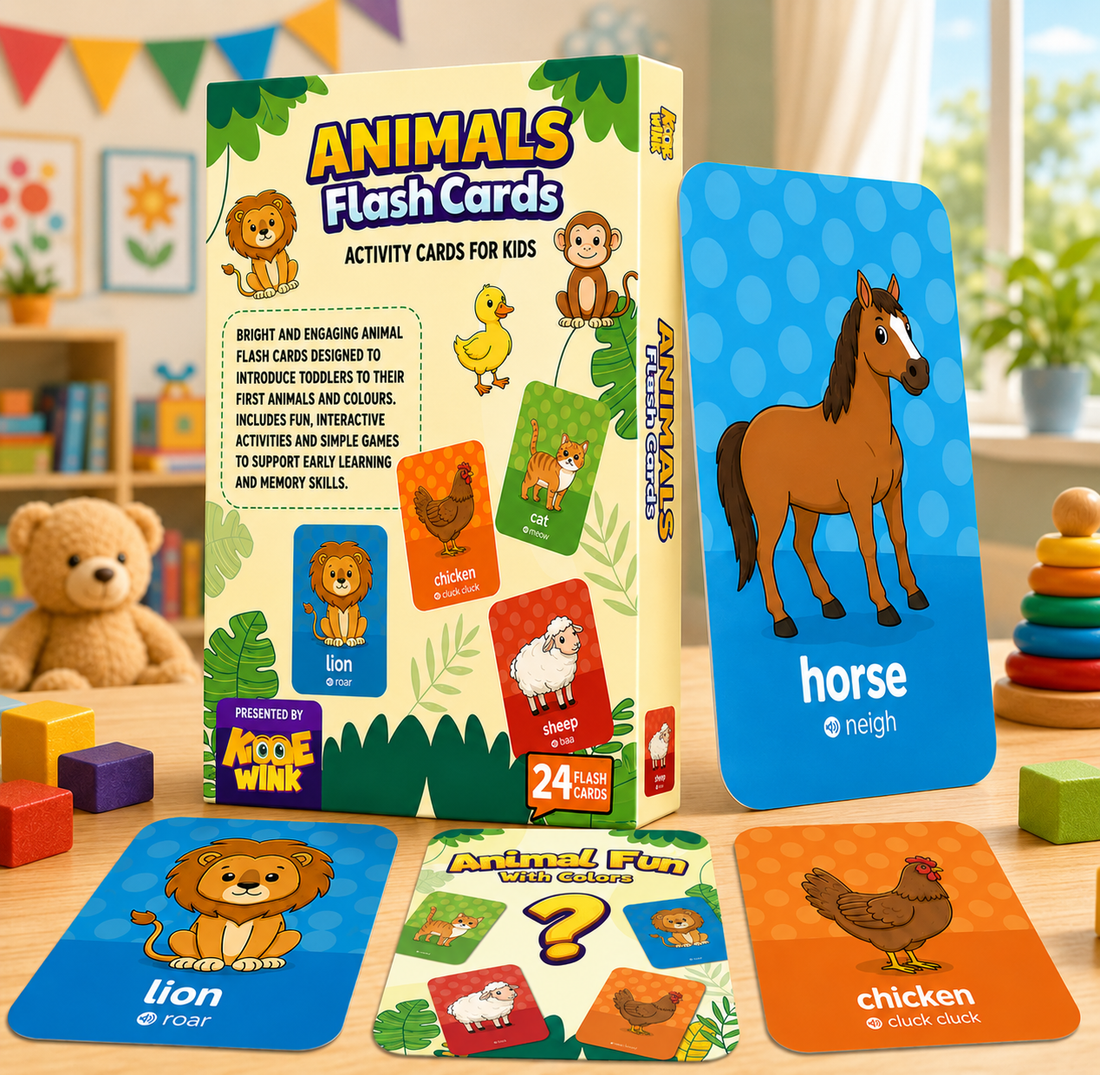
Toddlers may enjoy pointing, reaching, repeating sounds or naming familiar things. Animal cards can lead to fun conversations: “Where is the cat?” or “What sound does a cow make?” The Animal Flash Cards are one option for picture-based play. Keep the tone playful and avoid turning the activity into a test.
2–3 years: ABCs, numbers and matching
Older toddlers may enjoy matching identical pictures, sorting cards by colour, counting a few objects or noticing the first letter of a familiar word. Start with concepts the child already knows and gradually add new ones. There is no need to cover every letter or number in one sitting.
How to use baby flash cards in five minutes
- Choose a quiet moment when your child is alert and interested.
- Show two or three cards, holding them where the child can see them comfortably.
- Name the picture clearly and leave a pause for the child to look, point or respond.
- Follow their interest. If they focus on one picture, talk about it rather than rushing ahead.
- Stop when they lose interest, become restless or need a break.
Five minutes is a helpful starting point, not a strict target. Some sessions will be shorter; others may naturally turn into a longer conversation. Singing, reading picture books and talking during everyday routines are equally valuable ways to share language.
ABC vs numbers vs animal cards: where should you start?
Animal cards are often easy to make playful because you can name animals and imitate sounds. ABC cards may suit children beginning to notice letters, especially when linked to familiar names and objects. Number cards can be paired with real objects—counting two blocks is more concrete than only looking at the number “2.” For young babies, simple images and interaction matter more than the category printed on the box.
Choose the set that matches your child's current interest. Rotate cards occasionally instead of displaying everything at once. If your child prefers vehicles or food pictures, start there and introduce letters or numbers naturally later.
Where to buy learning cards in Pakistan
Explore KiddieWink's Learning Toys collection and review individual product details for age guidance, card count, size and materials. Prices and availability can change, so check the current listing before ordering.
Frequently asked questions
Are baby flash cards good for newborns?
Simple high-contrast pictures can be used for short, calm looking sessions while the baby is awake. They are not essential, and talking, cuddling and responsive interaction are also important.
How often should I use learning cards for babies?
Use them when your child is interested. A short session is fine; stop when the child shows they need a break.
Should I start with ABC flash cards?
Not necessarily. Pictures of animals, familiar objects or simple patterns may be a more engaging starting point, depending on the child's age.
Where can I find ABC flash cards Pakistan parents can order online?
Browse the Learning Toys collection and confirm the product details on the live listing.
Final thoughts
Learning cards work best as an invitation to connect, not a performance test. Follow your child's curiosity and keep the experience relaxed. Find more play-based learning ideas at KiddieWink.pk.
 Flash Cards
 Sensory Toys
 RC Toys
 Building Toys
 Learning Toys
 Soft Toys