


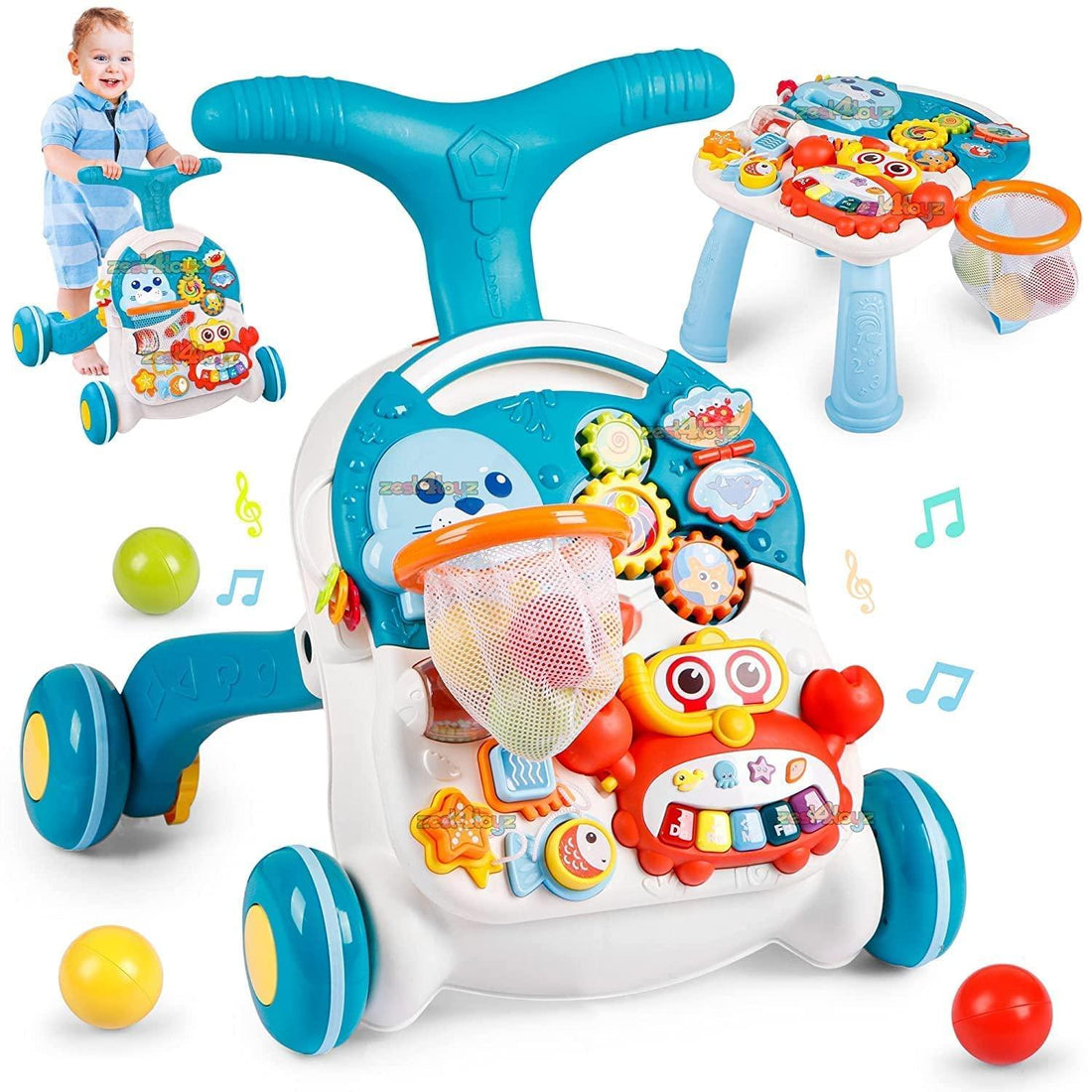
Baby Walker in Pakistan: Is It Safe? A Parent’s Guide
When searching for a baby walker Pakistan shops sell, parents often hope it will keep a baby entertained and help them take their first steps. But it is important to distinguish a seated walker with wheels from a stationary activity centre or a push toy. These products work differently, and safety advice is not the same for all of them.
The American Academy of Pediatrics advises against mobile infant walkers with wheels because they can move quickly, allow babies to reach hazards and cause serious injuries. It also notes that wheeled walkers do not teach babies to walk and may delay walking. Read the guidance here: American Academy of Pediatrics: Baby Walkers—A Dangerous Choice.
Why are traditional baby walkers popular?
In Pakistan, families may see walkers marketed as a way to entertain babies or help them move around before walking independently. Some products also have trays with toys and music. However, a baby enjoying the tray does not mean the wheeled seat is helping them learn to walk. Babies develop balance and movement through their own practice, including supervised floor time and pulling to stand when ready.
Benefits and risks: what parents should know
A walker tray may provide toys to look at, but the wheels introduce significant hazards. A baby can roll towards stairs, hot drinks, kitchen appliances, pools or other dangers before an adult can react. Walkers can also help children reach objects they could not otherwise access. Close supervision does not remove all these risks, and a walker should never be treated as a safe place to leave a baby.
For this reason, this guide does not recommend a wheeled seated walker as a learning-to-walk tool. If you are unsure about a product, ask your paediatrician or child-health professional about safer alternatives for your baby's stage.
What about age, surfaces and time limits?
There is no age or short time limit that makes a mobile seated walker risk-free. A smooth floor, closed stair gate or an adult nearby cannot eliminate the basic problem: the baby can move quickly and reach hazards. Always follow the manufacturer's age and safety instructions for any baby product, but do not interpret those instructions as proof that a wheeled walker is risk-free.
Safer alternatives to traditional walkers
Supervised floor play
Give your baby a clear, baby-proofed space to practise rolling, reaching, sitting and crawling as their skills develop. Place a safe toy nearby and let the child explore at their own pace.
Stationary activity centres
A stationary activity centre has no wheels for the baby to roll around in. It may provide a place for short, supervised play if it is suitable for the child's age and size. Follow product guidance and do not use it for sleep.
Stable furniture and supported cruising
When a child begins pulling to stand, they may practise moving sideways while holding stable furniture under close supervision. Keep furniture secured and remove sharp-edged or unstable items from the area.
Push toys
Push toys are different from seated walkers, but they are not suitable for every child or every setting. Choose a stable design intended for the child's developmental stage, use it on an appropriate surface and stay close. Ask a health professional if you have concerns about balance or readiness.
What to check when shopping for baby essentials
Read the product name carefully: “activity walker,” “stationary activity centre” and “push walker” can describe different products. Check photos, dimensions, age guidance and warnings rather than relying only on a title. KiddieWink has products in its 0–2 Years collection; inspect the exact item before deciding whether it fits your needs. A product being available for sale does not mean it is recommended for every baby.
Frequently asked questions
Does a baby walker help babies walk earlier?
The American Academy of Pediatrics says wheeled infant walkers do not teach babies to walk and may delay walking.
Is it safe to use a walker if I supervise?
Supervision cannot eliminate the rapid movement and access-to-hazards risks of a wheeled seated walker. The AAP advises against mobile walkers.
What can I use instead of a baby walker?
Consider supervised floor play, a suitable stationary activity centre, stable furniture for supported cruising or an age-appropriate push toy.
Where can I find baby walker products in Pakistan?
Review the product details and safety instructions carefully, and speak to your paediatrician if you are unsure. Browse baby products at KiddieWink's 0–2 Years collection.
Final thoughts
For babies, safety and opportunities to move naturally matter more than equipment designed to speed up walking. If choosing baby gear, distinguish wheeled seated walkers from stationary activity centres and push toys, and ask a qualified health professional for individual advice. Explore age-labelled products at KiddieWink.pk.
 Flash Cards
 Sensory Toys
 RC Toys
 Building Toys
 Learning Toys
 Soft Toys